
Saga Dawa is one of the four most sacred periods in the Tibetan Buddhist calendar, marking the birth, enlightenment, and parinirvana of Buddha Shakyamuni. In 2026, it will take place from May 16 to June 14, culminating on the full moon of May 31, when Saga Dawa Düchen is celebrated.
It is also called the “month of merits,” a period dedicated to generating merit through virtuous actions and positive thoughts.
It is said that during Saga Dawa, actions, whether virtuous or not, are multiplied 100 million times.
Therefore, practitioners make an extra effort to accumulate merit during this period, such as practicing generosity, virtue, and compassion, and then dedicating it for the benefit of all beings. For example, you can offer food to a person or an animal, visit someone in the hospital, speak kindly, and so on.
• No prerequisites
• Registration is required
• Registrants will receive a link to an exclusive video by Lama Tsering explaining how to perform the Vajrasattva practice
• In-person and online
• You can participate for 1 or more days
• Spontaneous offering
Plan ahead and join the sangha in this merit-accumulating practice!
During the first 15 days of Saga Dawa, we will hold a daily Vajrasattva session:
- May 16–31
- 7pm to 9pm
There will be no practice on the tsog days: May 23 and 25
Saga Dawa Düchen - May 31
1pm - Life-Saving practice
2pm - Vajrasattva and Amitabha practice
4pm - Evening puja
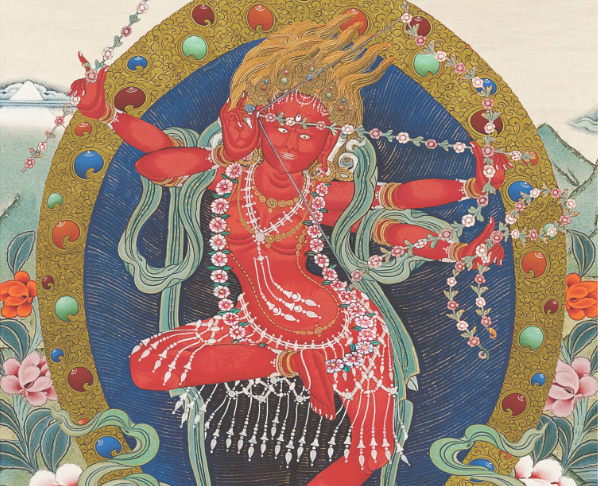
7pm - Red Tara tsog
Saga Dawa takes place in the 4th lunar month of the Tibetan calendar. The sacred period begins on the new moon of that month, reaches its peak after 15 days, on the full moon, and lasts until the next new moon.
On the day of the full moon, Saga Dawa Düchen takes place, which is considered the most important holy day of the year for Tibetan Buddhism. It commemorates the enlightenment and parinirvana of Buddha Shakiamuni.
The seventh day of this period commemorates the birth of Shakiamuni Buddha, Tampei Düchen.
Düchen means “great occasion”.
A vow is a commitment. You don't need an empowerment to make one or more vows. The most important thing is to do it with the pure motivation of benefiting all beings until everyone is free from suffering and achieves immediate and definitive happiness.
Simply put, you stand in front of your altar (or anywhere) and visualize, in any way you can, Shakiamuni Buddha or your chosen deity, inseparable from your Lama and, in front of them, with them as witnesses, you proclaim your vow.
You can make vows for one day, for many days or even for the entire Saga Dawa period.
Vesak, which is followed by some Buddhist traditions, is the commemoration of Shakiamuni Buddha's birth, enlightenment and parinirvana on the same day, on the full moon of May.
For practitioners of Tibetan Buddhism, the equivalent of Vesak takes place during the Saga Dawa period. In addition, within this period, there is a specific day to celebrate Shakiamuni Buddha's enlightenment and parinirvana, called Saga Dawa Düchen, and another to celebrate the Buddha's birth, called Tampei Düchen.